Discover one of Southern California’s most memorable underwater destinations with a practical local guide to La Jolla’s shore dives, kelp forests, marine life, seasonal conditions, parking, preparation, and safety.
La Jolla Cove, La Jolla Shores/Canyon, Marine Room
Certification
Open Water certification minimum for Dive California guided scuba tours
Typical depths
Approximately 15–50 ft at common shore routes; deeper canyon profiles require advanced training and planning
Water
Cool temperate Pacific conditions; thermoclines are common
Visibility
Highly variable and affected by swell, plankton, runoff, and local conditions
Exposure protection
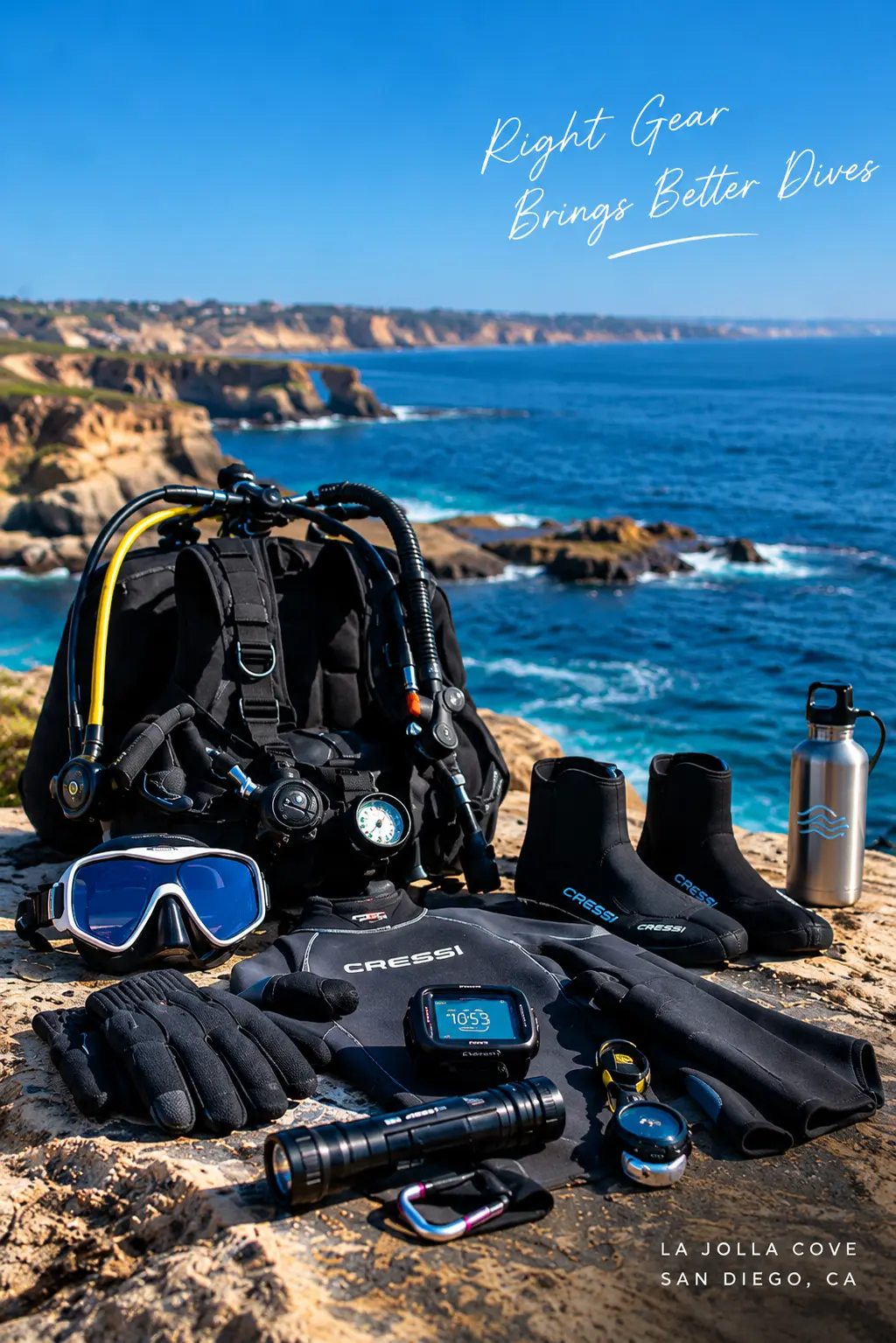
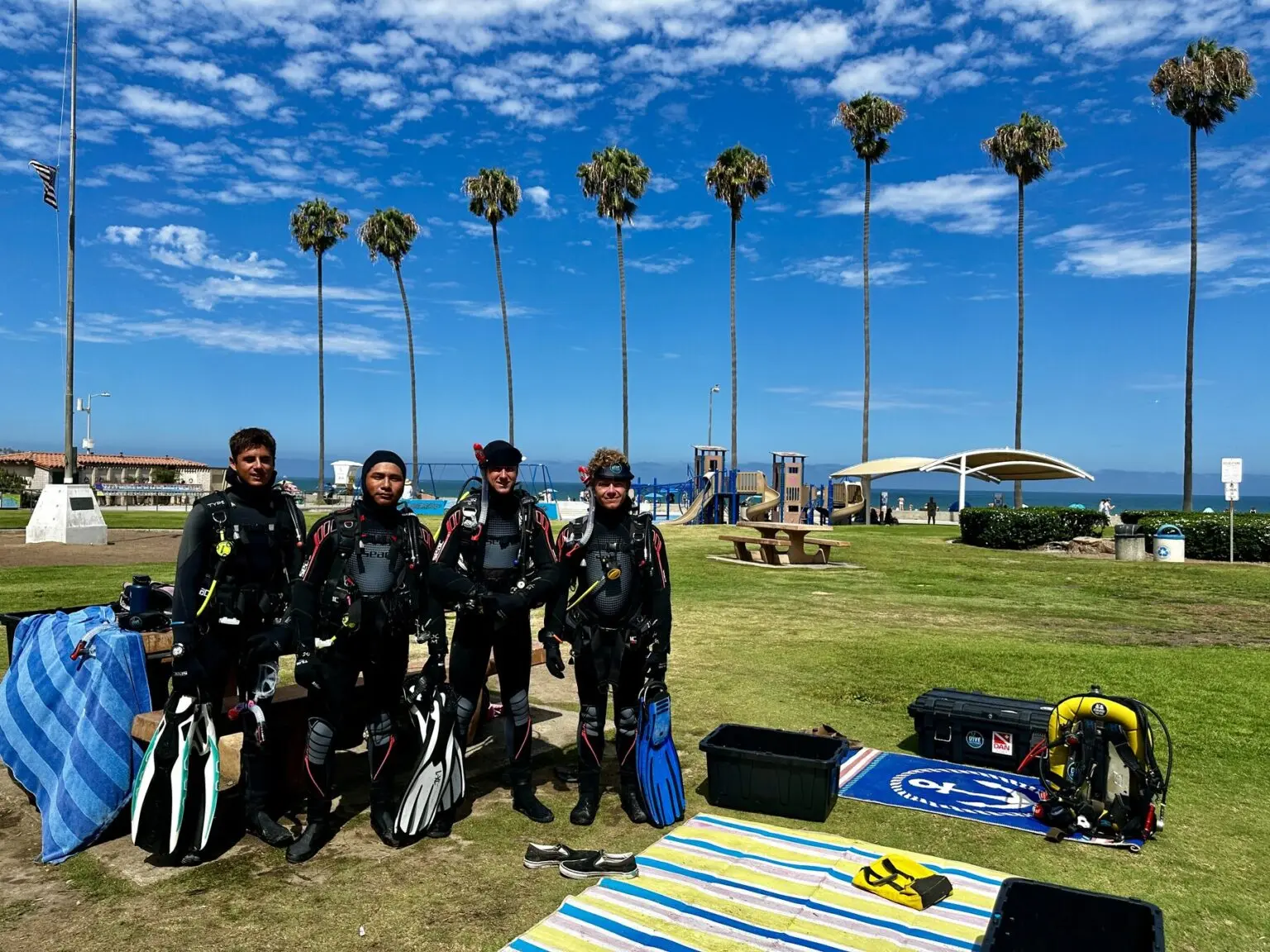
Most scuba divers use a full 7 mm wetsuit with hood, gloves, and boots, or an appropriate drysuit
Watch the La Jolla Experience
1 : 24
Why dive in la jolla
Diverse Underwater World, Right from Shore
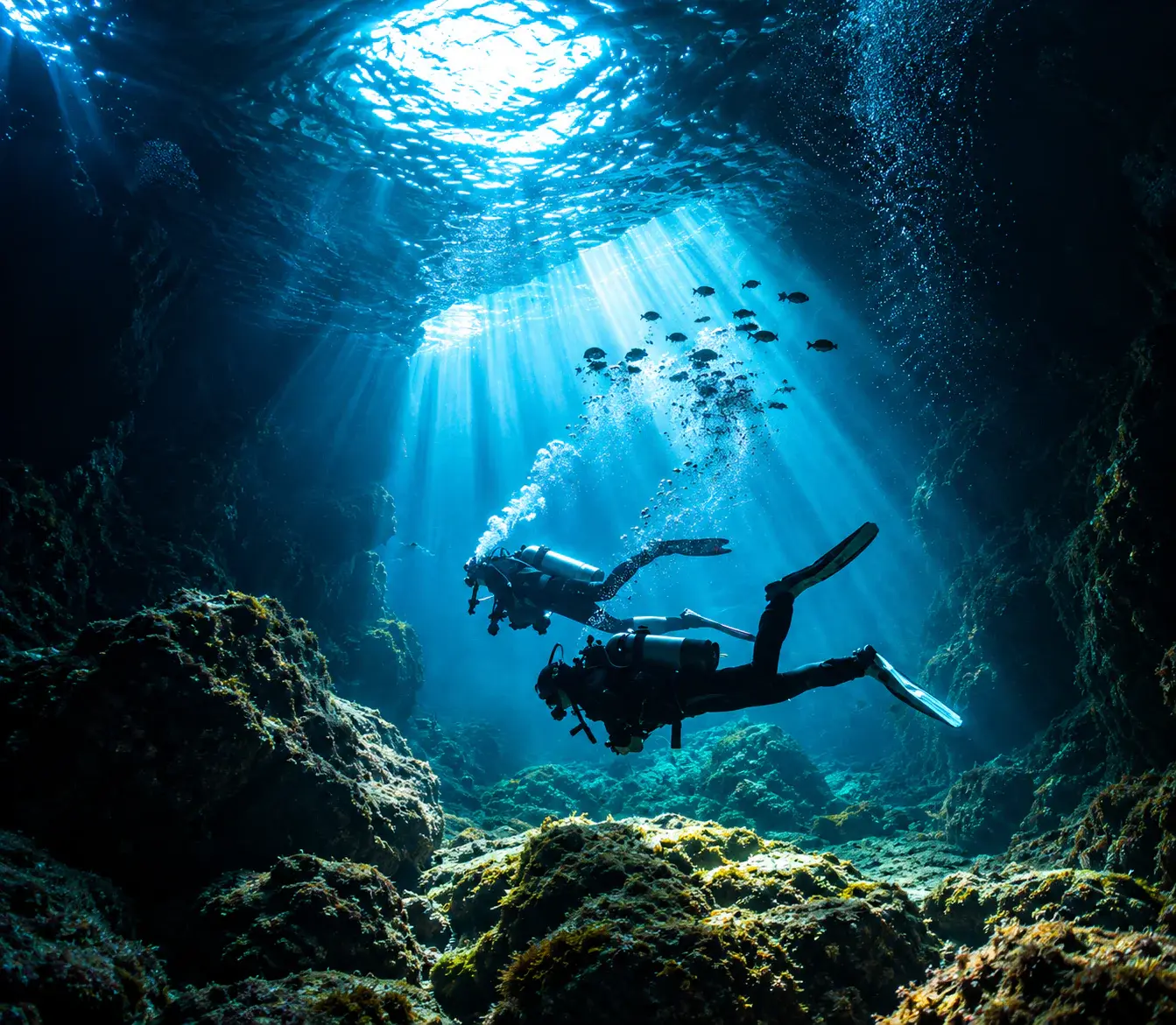
La Jolla brings several of San Diego’s signature underwater environments together along a compact stretch of coastline. Certified divers can explore rocky reef, sandy flats, kelp, seagrass, and the edge of a dramatic submarine canyon—often from a shore entry.
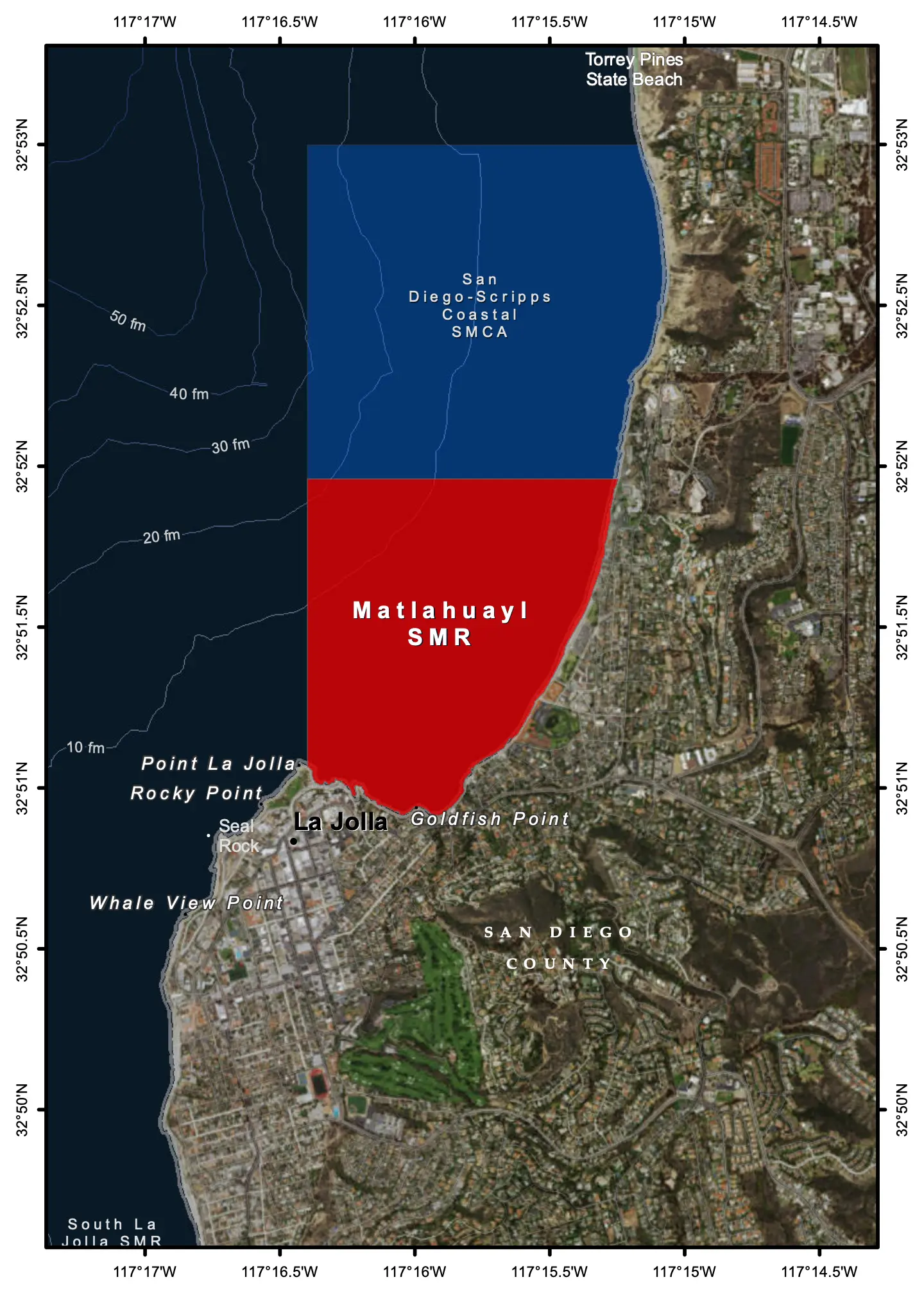
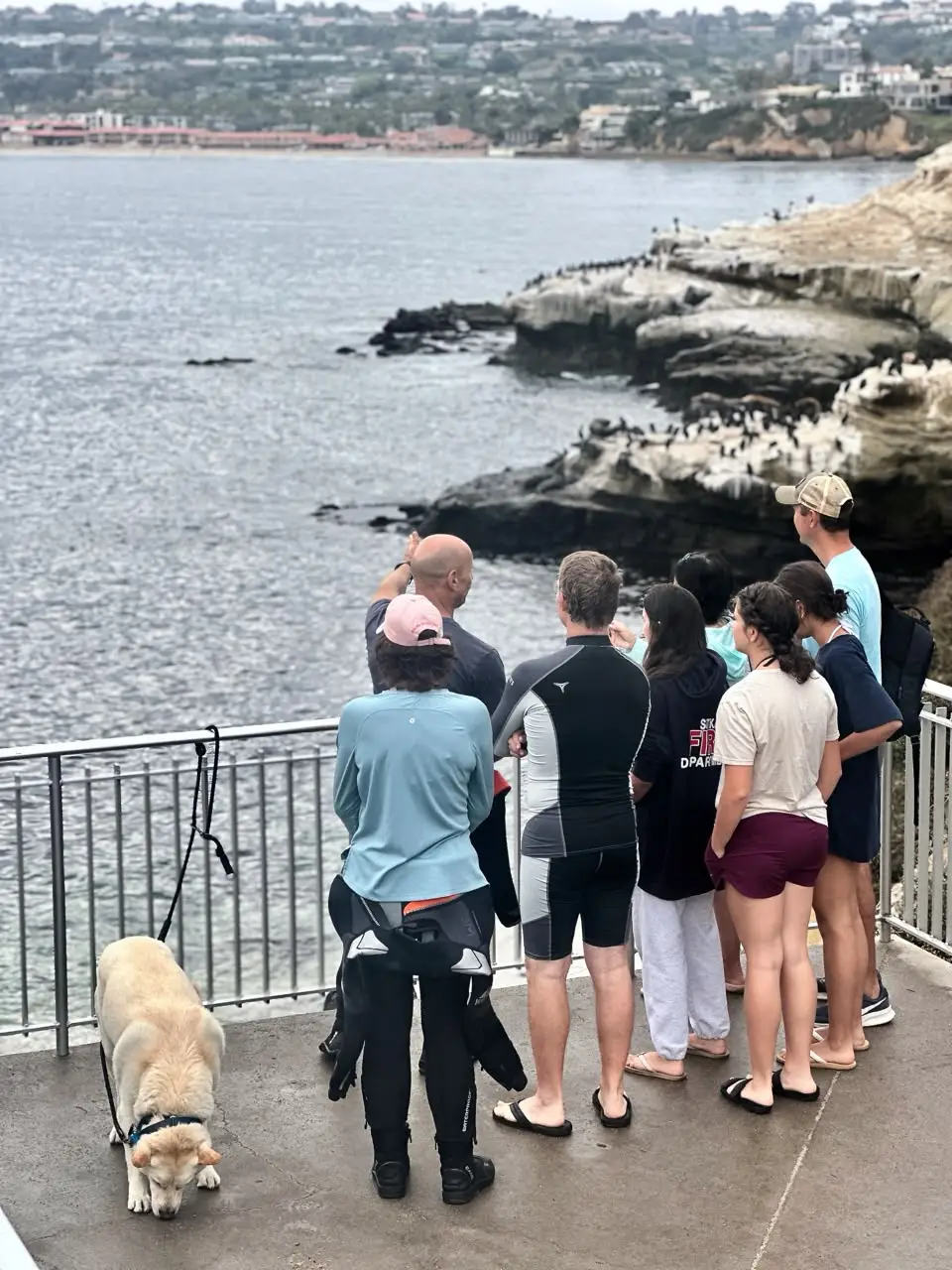
Much of the area is protected within marine reserves where taking or damaging marine resources is restricted. That protection, combined with productive Pacific water, supports a diverse mix of fish, invertebrates, sharks, rays, marine mammals, and seasonal visitors.
La Jolla is accessible, but it is not tropical resort diving. Water is cooler, visibility changes quickly, entries may involve surf or stairs, and some routes require a surface swim. Good planning—and local knowledge when conditions are unfamiliar—can make the experience safer, more comfortable, and far more rewarding.
La Jolla isn’t tropical resort diving. It’s cooler, wilder, and even more rewarding.
Wildlife changes with season, site, time of day, and ocean conditions. No encounter is guaranteed, but La Jolla rewards patient divers with an unusually varied ecosystem.
Kelp, reef, and sandy-bottom life
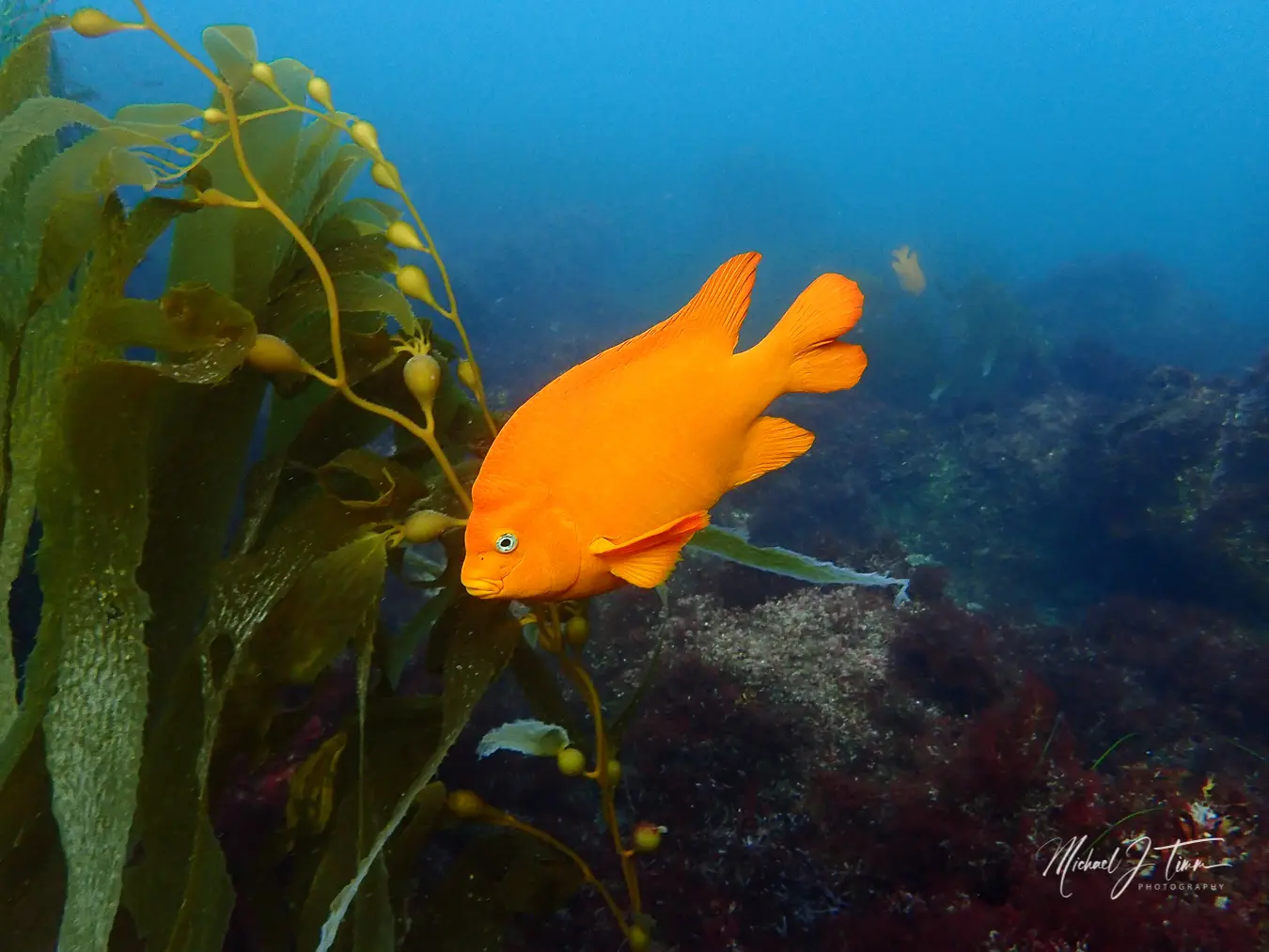
Giant kelp, surfgrass, garibaldi, blacksmith, kelp bass, sheephead, rockfish, halibut, moray eels, and many smaller reef species.
Sharks and rays
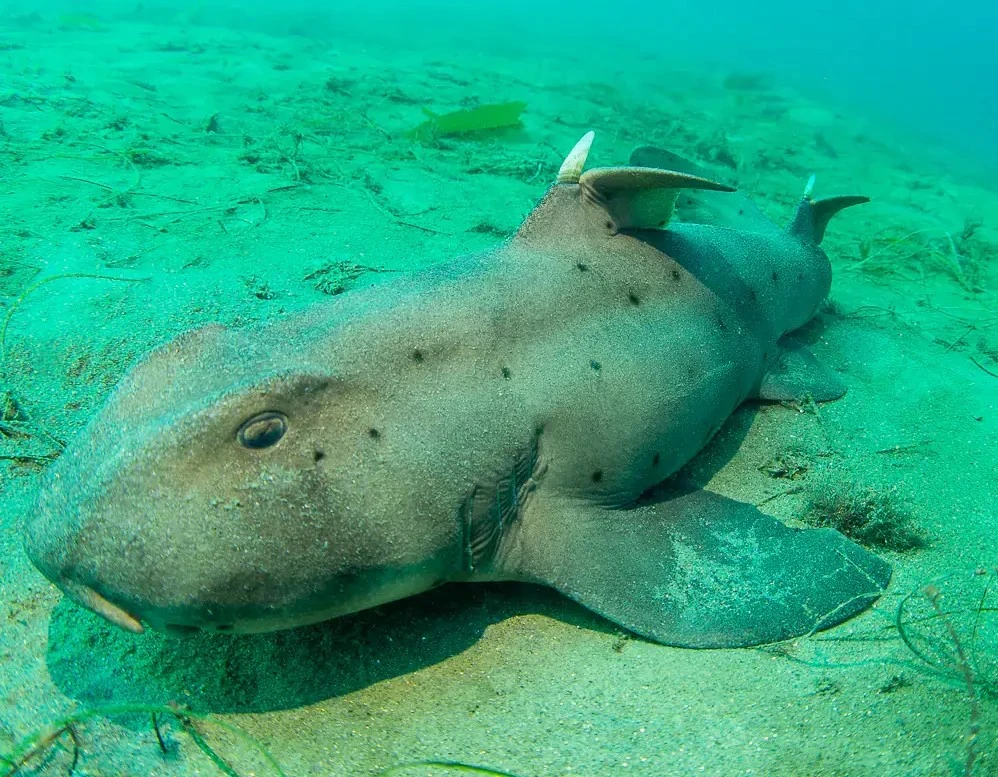
Horn sharks, leopard sharks, bat rays, round rays, guitarfish, and occasional larger seasonal visitors such as sevengill or soupfin sharks.
Invertebrates
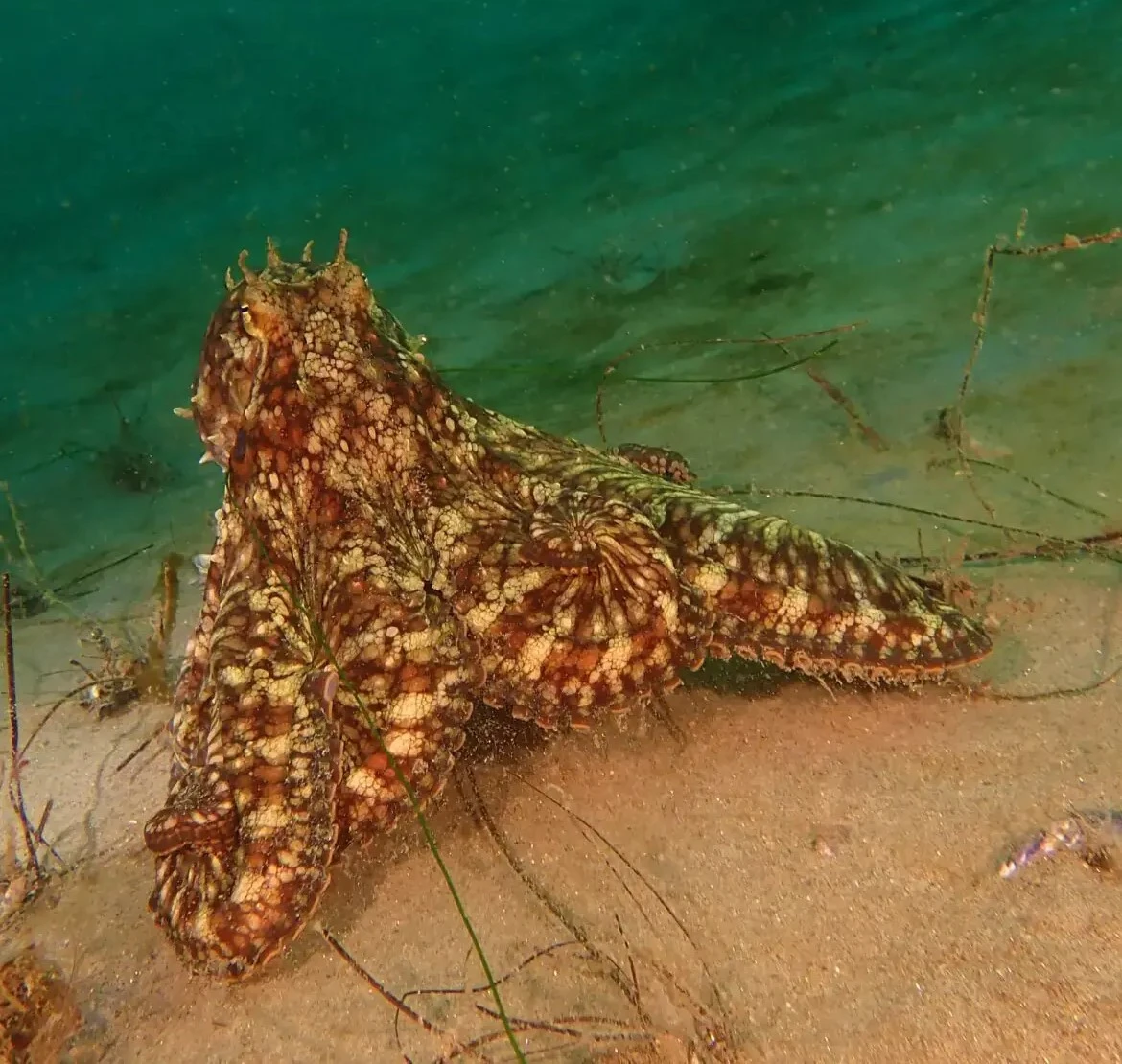
California two-spot octopus, nudibranchs, sea hares, spiny lobster, sheep crab, rock crab, anemones, and sea stars.
Marine mammals and turtles
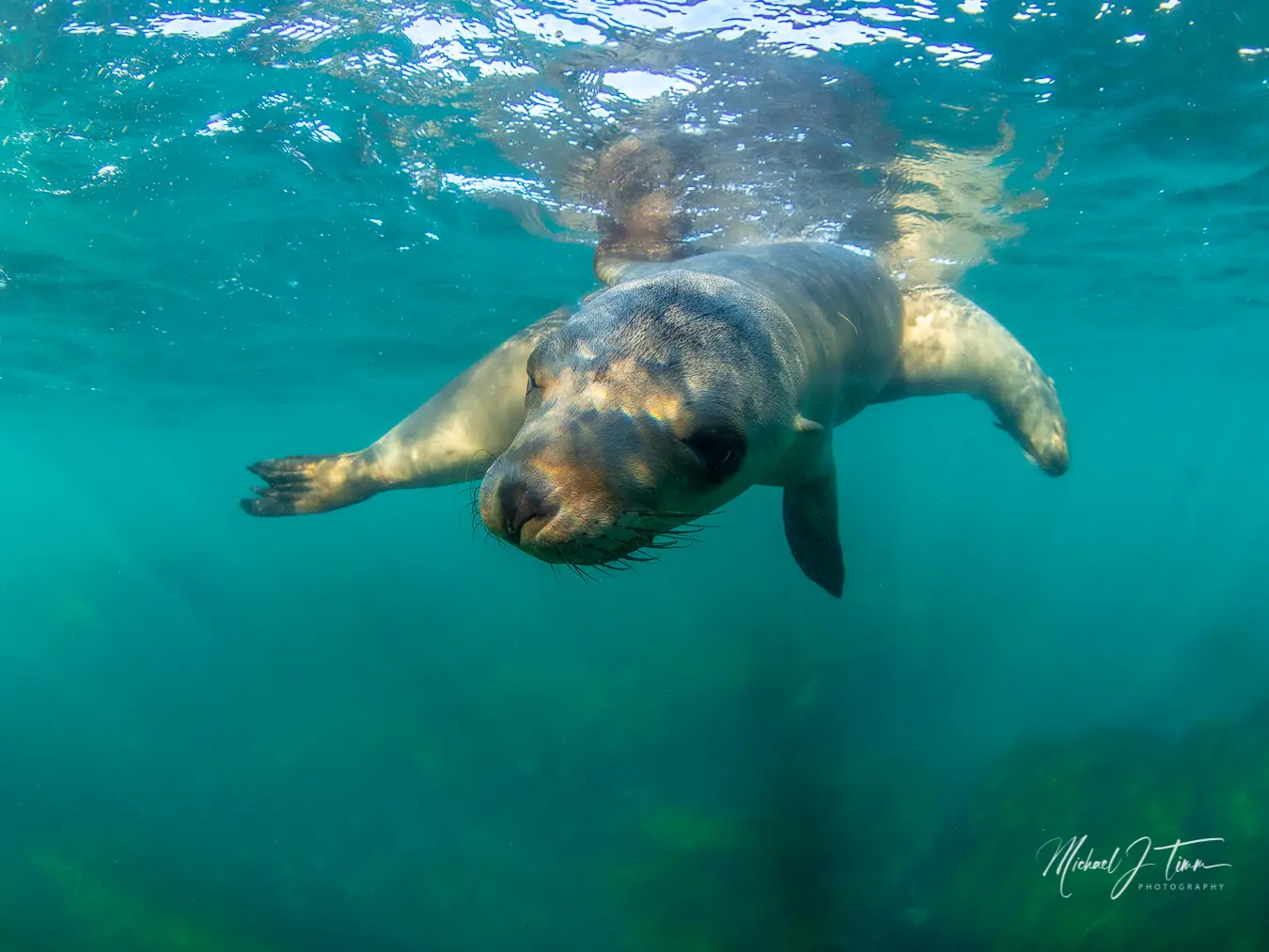
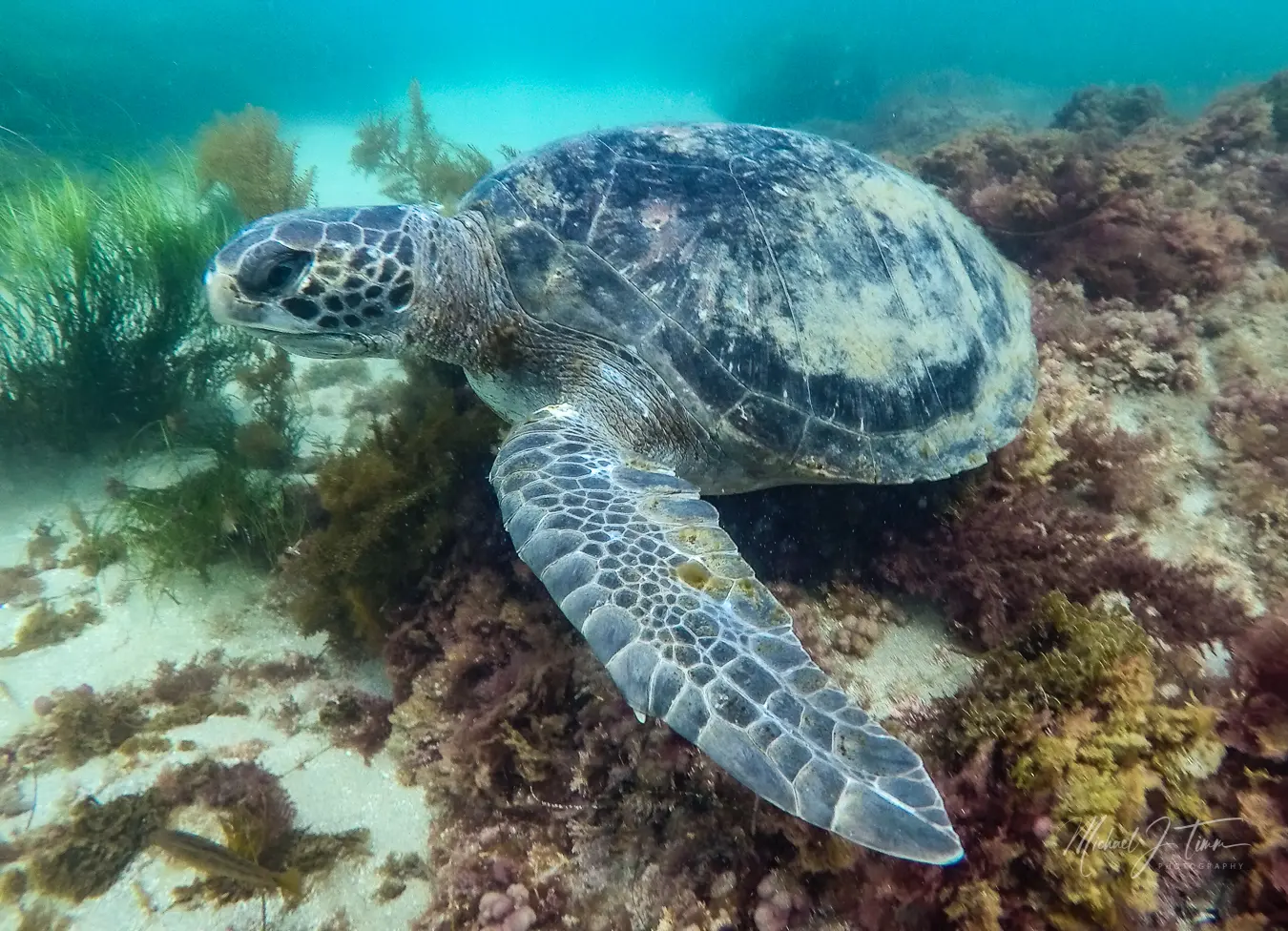
California sea lions and harbor seals may be seen in the area. Green sea turtles are occasionally encountered near La Jolla Shores and the Marine Room.
Wildlife etiquette
Never chase, touch, feed, surround, or attempt to provoke a reaction from wildlife. Give marine mammals and sea turtles generous space, change course when necessary, and allow animals to control the encounter.
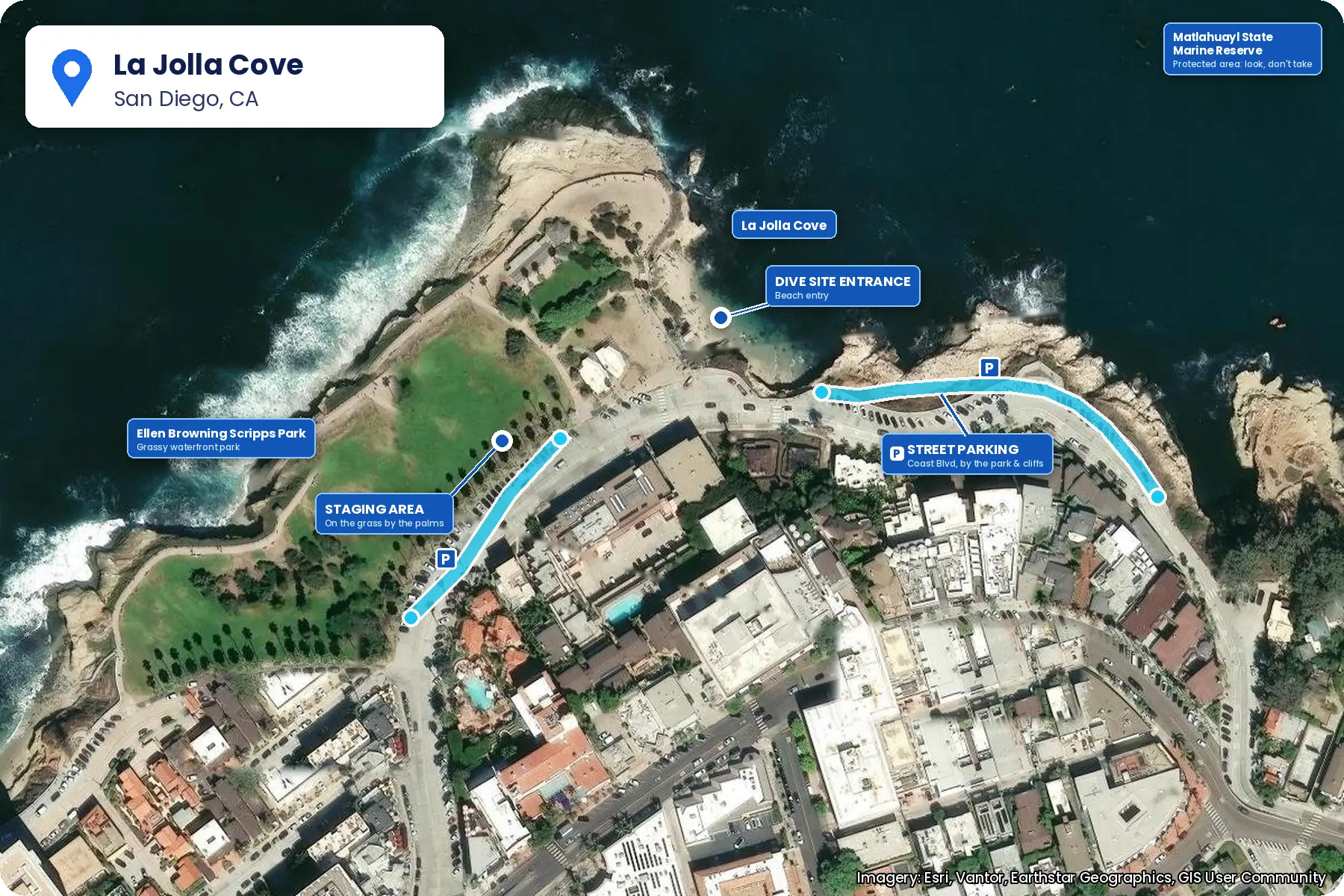
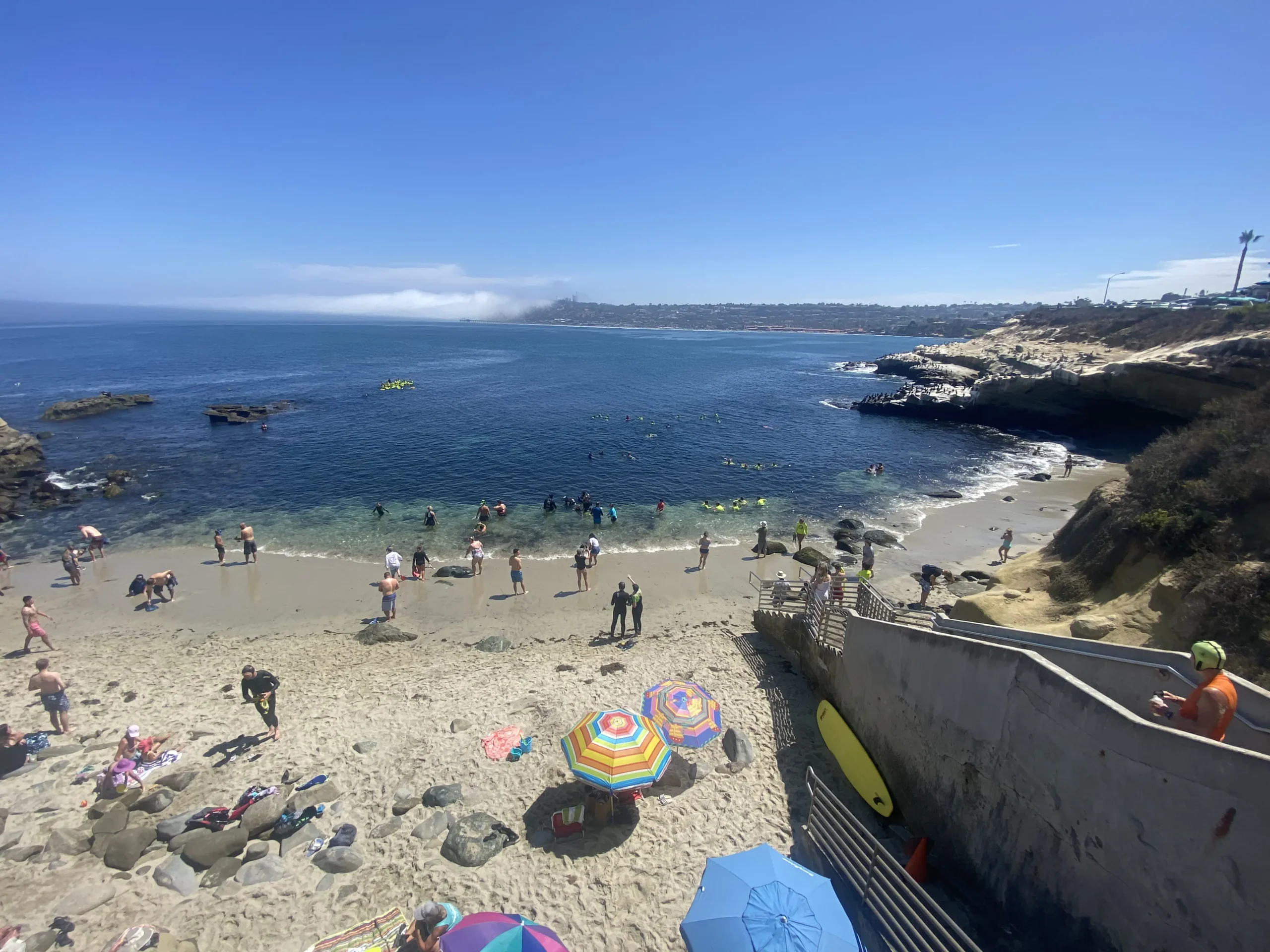
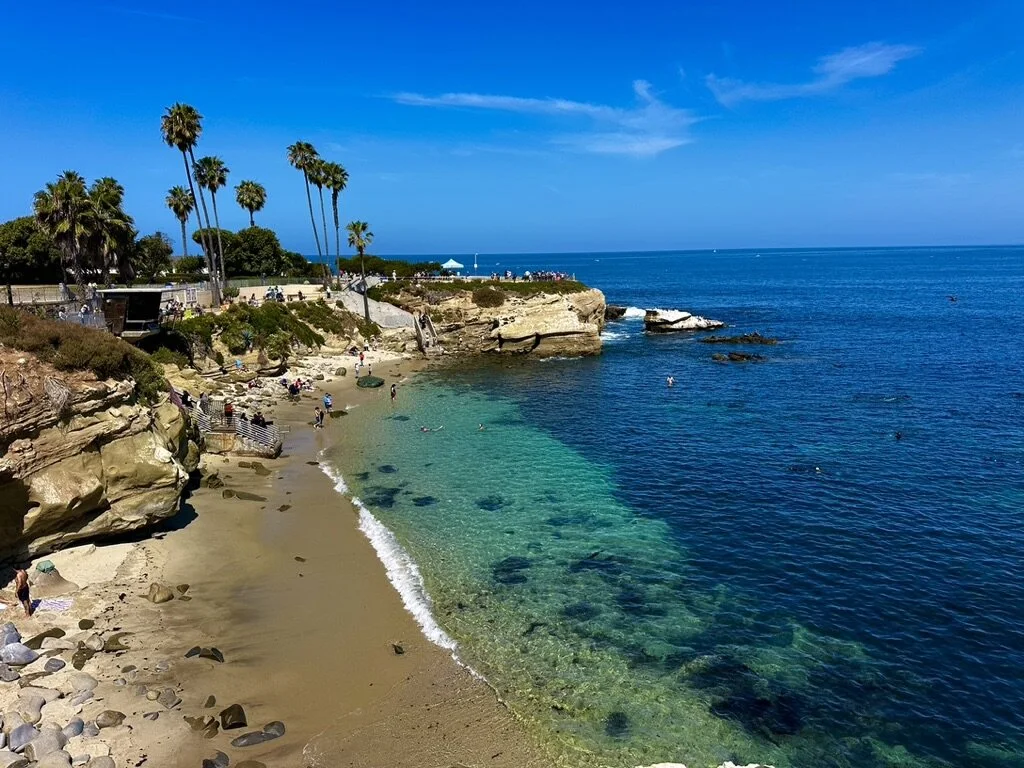
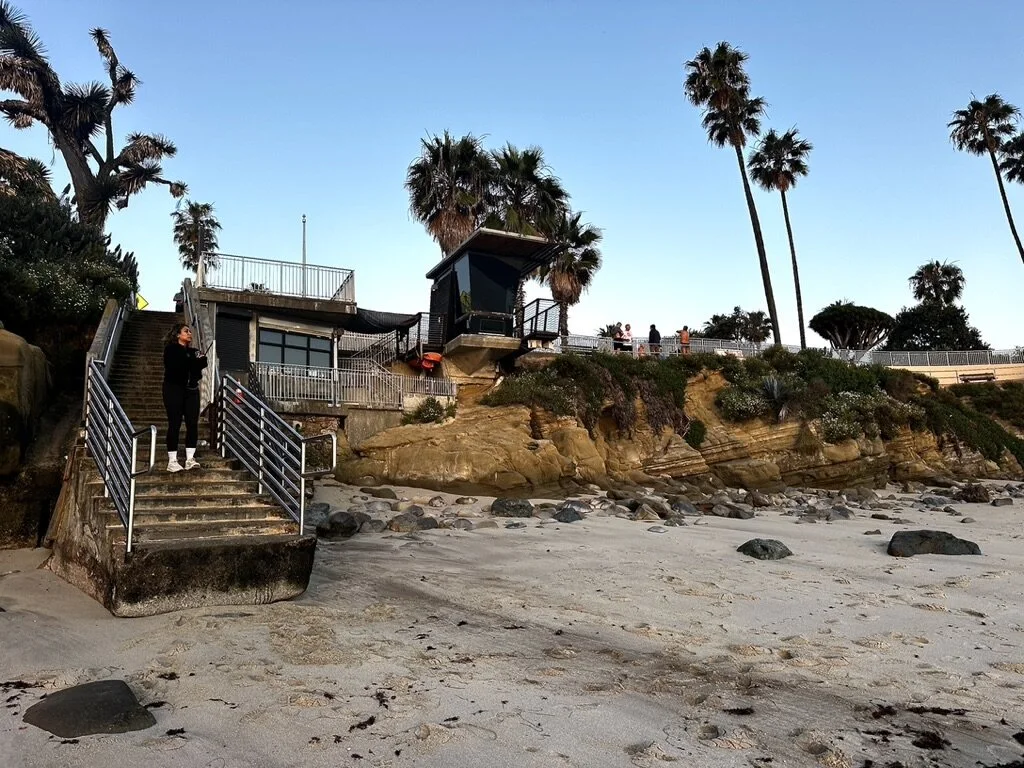
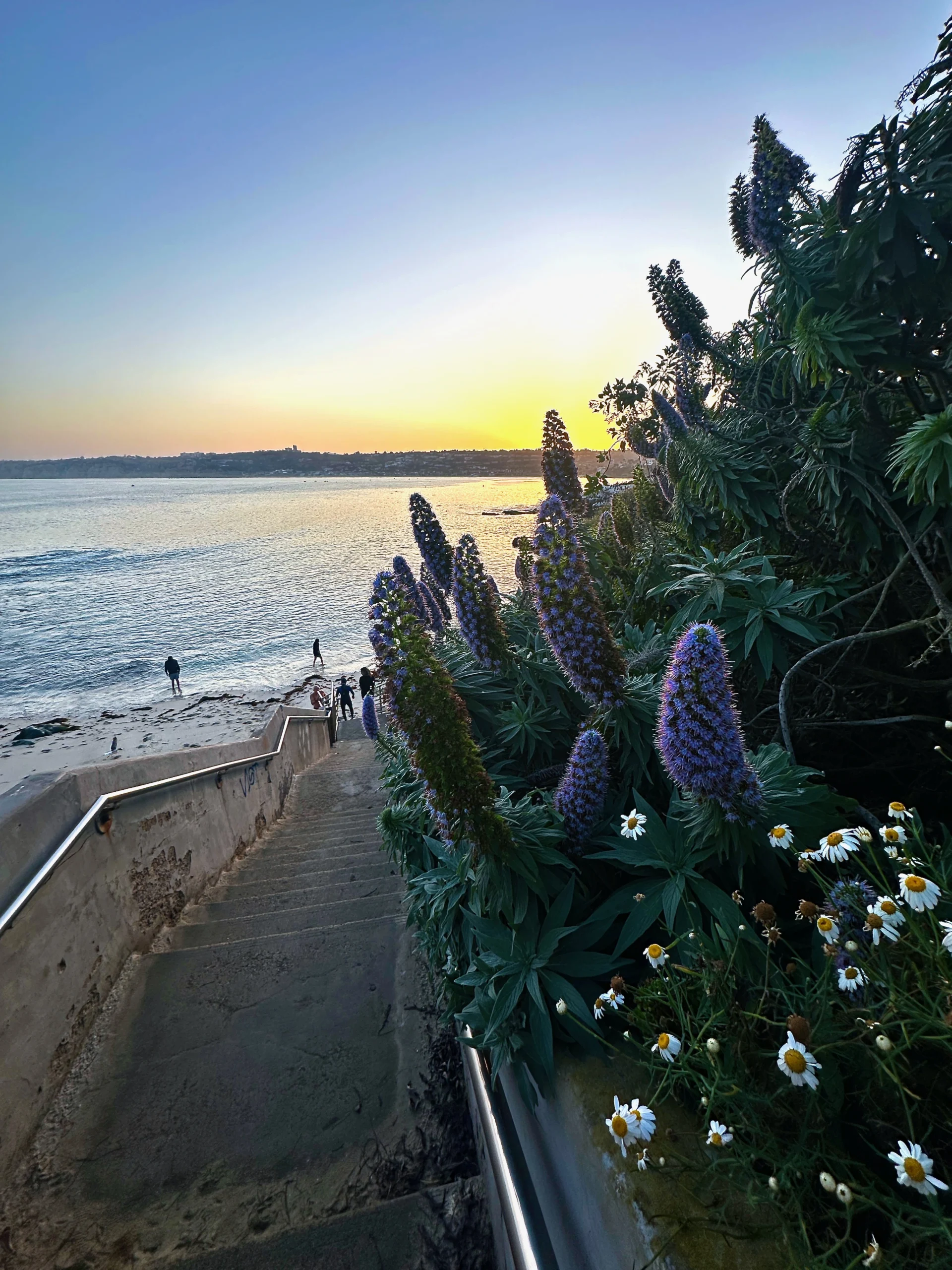
La Jolla Cove is the area’s best-known shore-diving entry. A staircase leads from Coast Boulevard to a small beach, and common routes pass rocky shallows before reaching reef and kelp habitat. The site can be beautiful on a calm day, but surge, submerged rocks, crowds, and changing visibility make careful entry timing and navigation important.
Good choice for guided sightseeing dives and local marine-life photography.
A surface swim may be required to reach portions of the kelp forest.
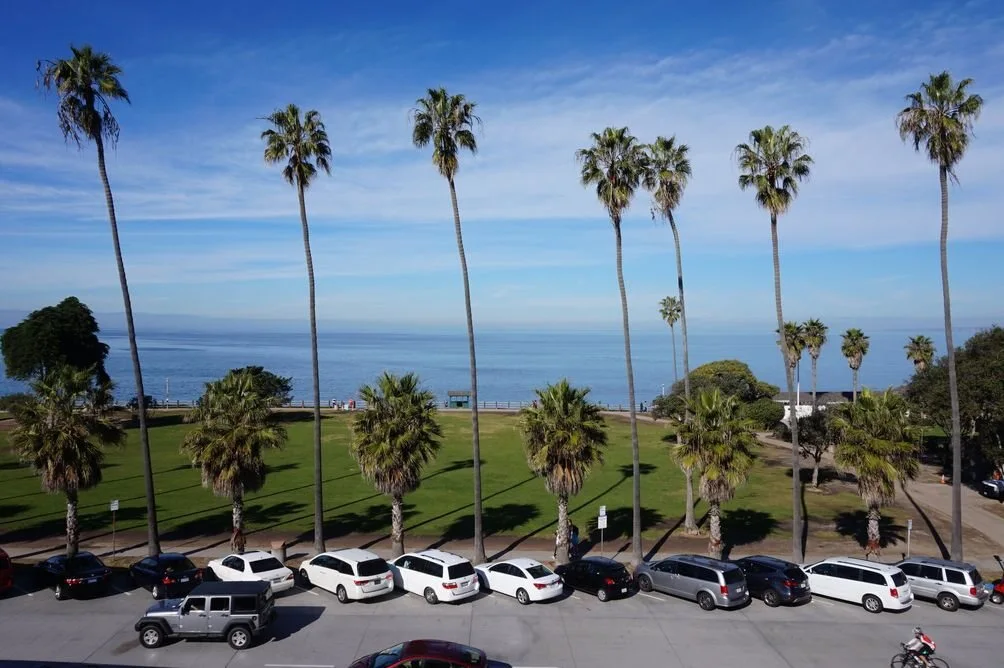
Street parking near Coast Boulevard is limited and time restrictions are actively enforced. Demand increases on sunny weekends, holidays, and during summer. Arrive early, read every sign, and allow extra time to carry equipment from a legal parking space. Public restrooms and freshwater showers are available near the lifeguard station; availability and operating conditions can change.
Ellen Browning Scripps Park & parking area
Ellen Browning Scripps Park & parking area
La Jolla Cove Beach view
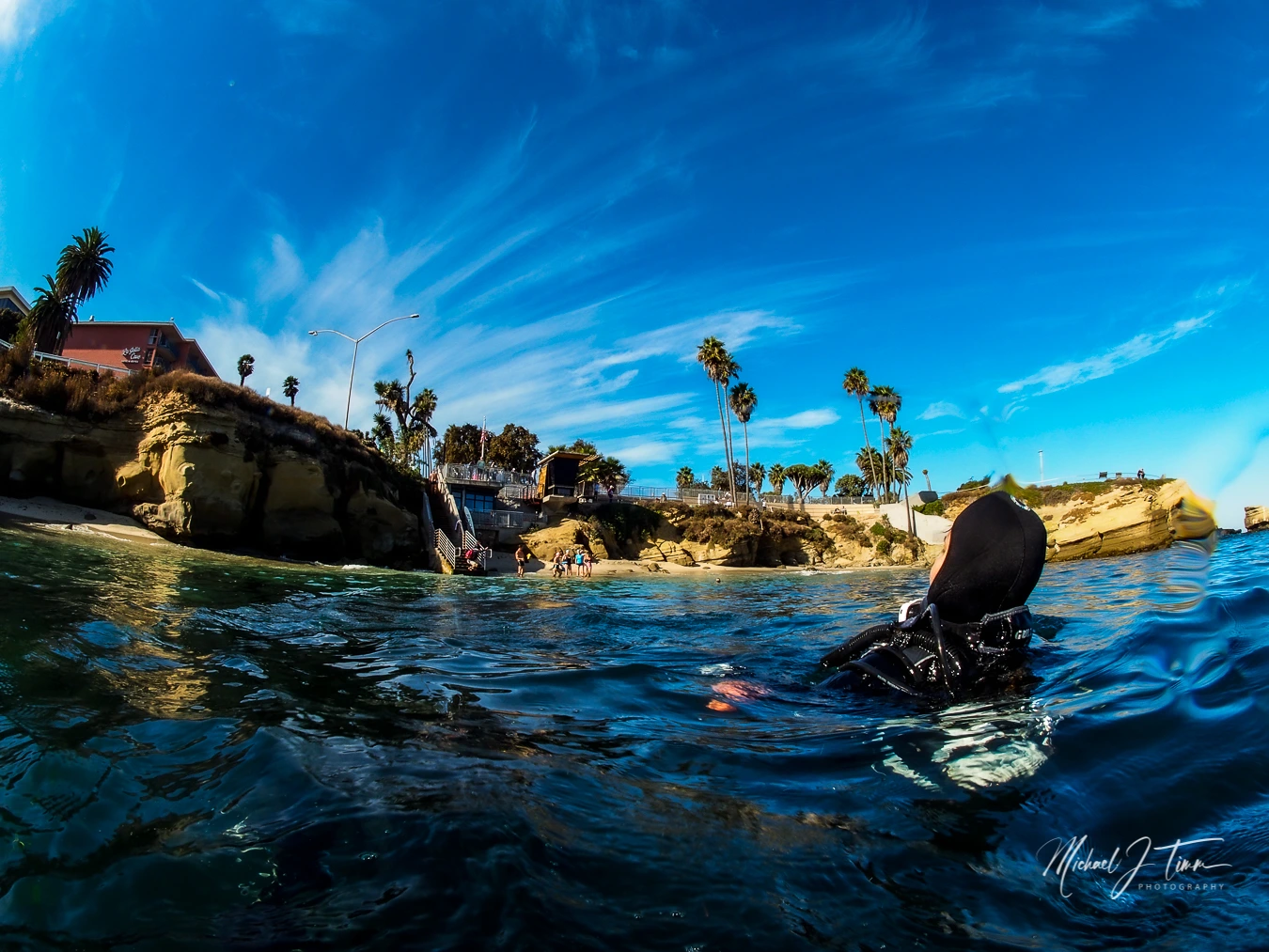
Scuba Diver Entering La Jolla Cove
Lifeguard Tower at La Jolla Cove
Stairs from Staging Area to Beach
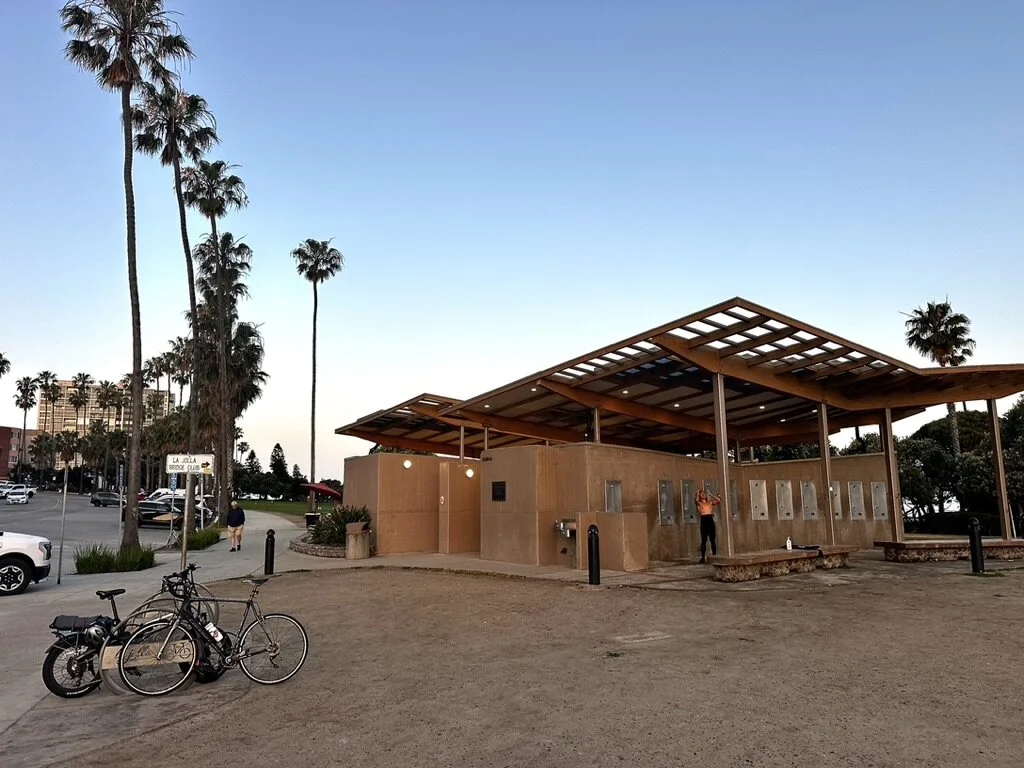
La Jolla Cove facilities with showers and restrooms
DIVE WITH CONFIDENCE
Considering Your First La Jolla Cove Dive?
A local guide can help with route selection, entry timing, kelp navigation, and the day’s changing conditions.
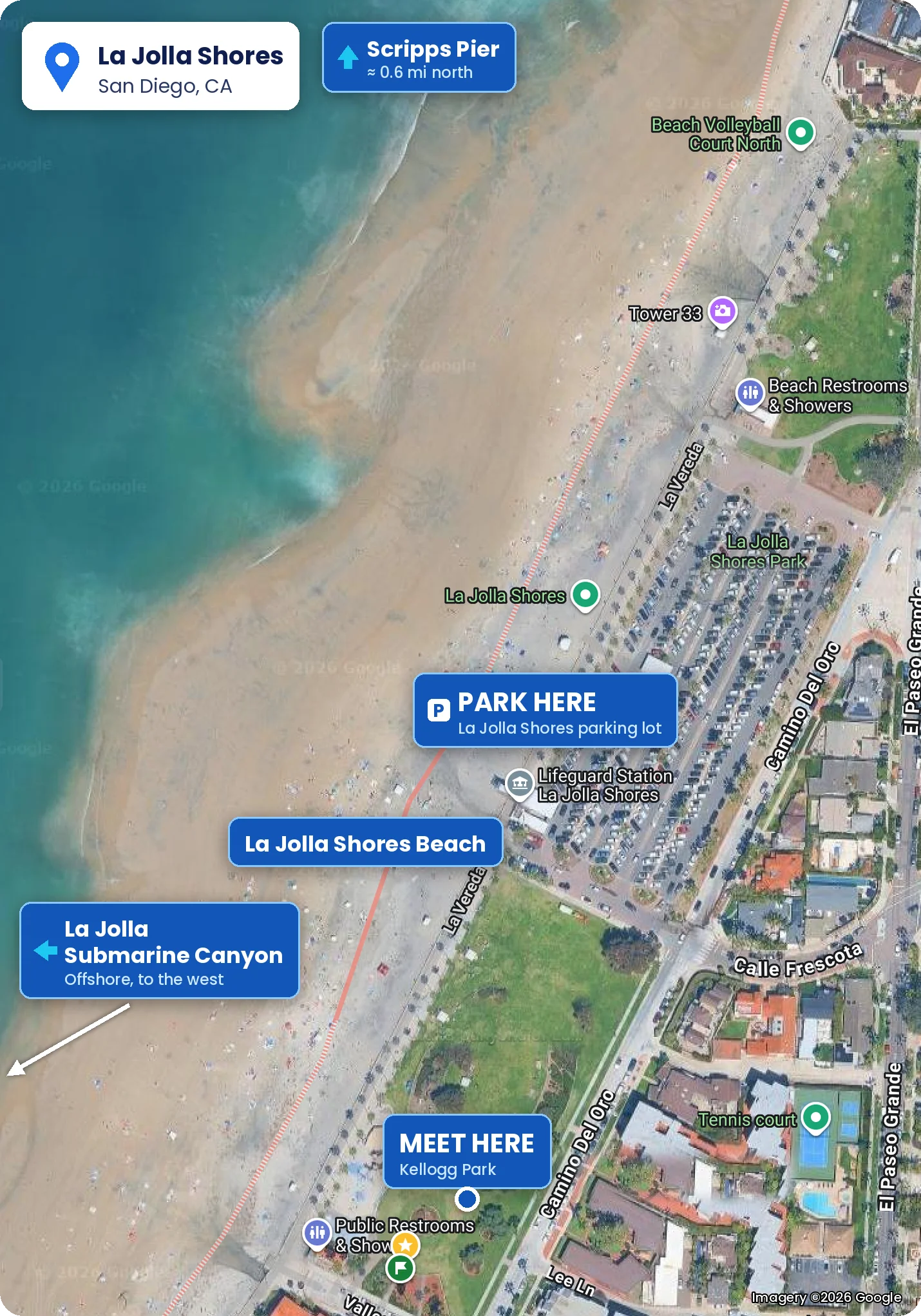
La Jolla Shores offers a wide sandy beach and a gradual entry, making it a common location for training, skills practice, and guided dives. Offshore, the seafloor slopes toward the La Jolla submarine canyon. The canyon continues far beyond recreational limits, so divers must maintain disciplined depth awareness, buoyancy control, navigation, and gas planning.
Popular for Open Water training and refresher sessions.
A strong option for night diving when conditions permit.
Shallow sandy areas may hold rays, guitarfish, halibut, and seasonal leopard sharks.
Kayaks, swimmers, paddlecraft, surf, and changing visibility require attentive surface and underwater awareness.
Depth
Shallow sand begins near shore; canyon profiles become progressively deeper.
Level
Open Water for appropriate shallow routes; advanced training for deeper canyon dives.
Best known for
Training, sandy entry, canyon topography, macro life, and night diving.
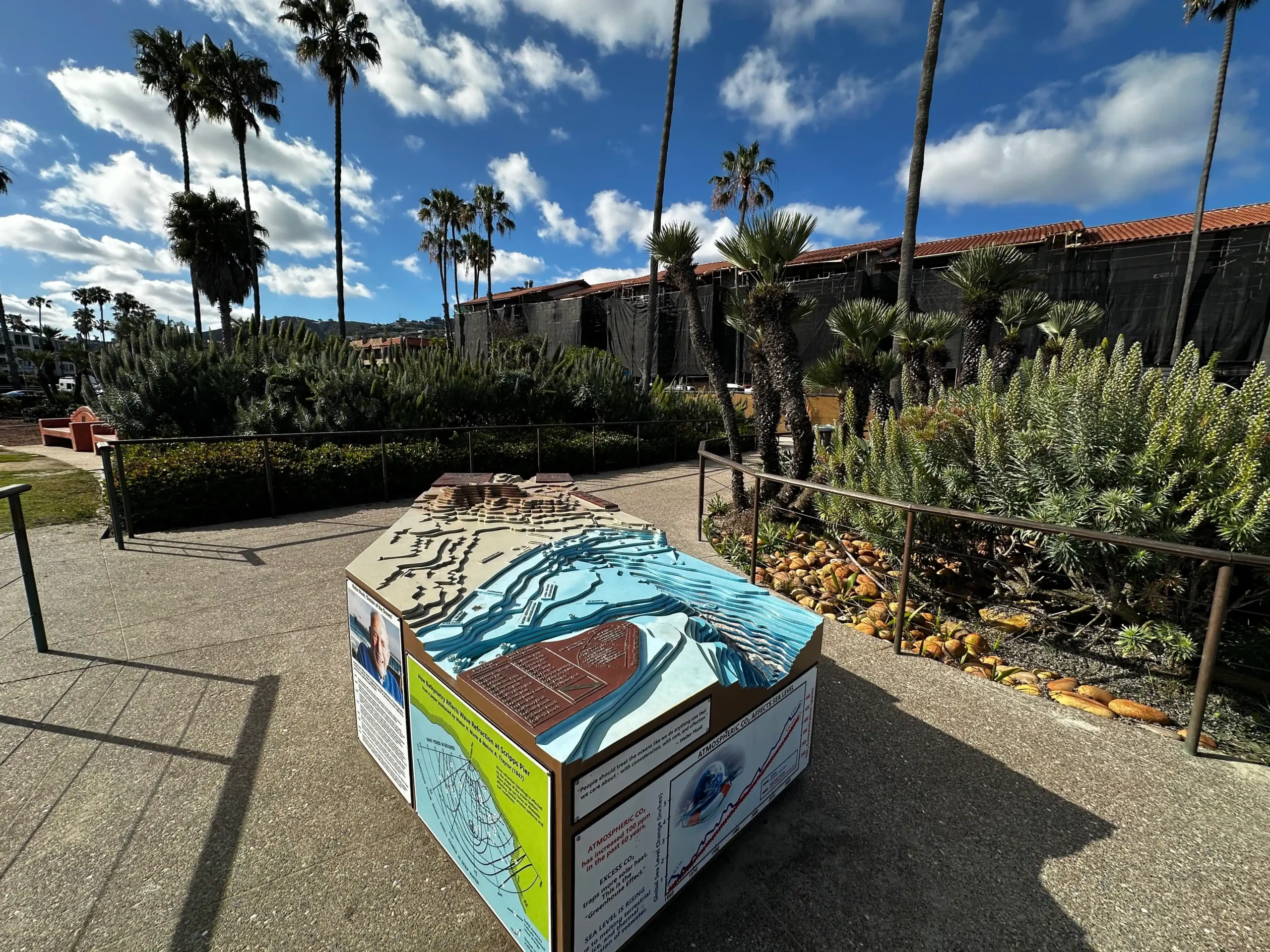
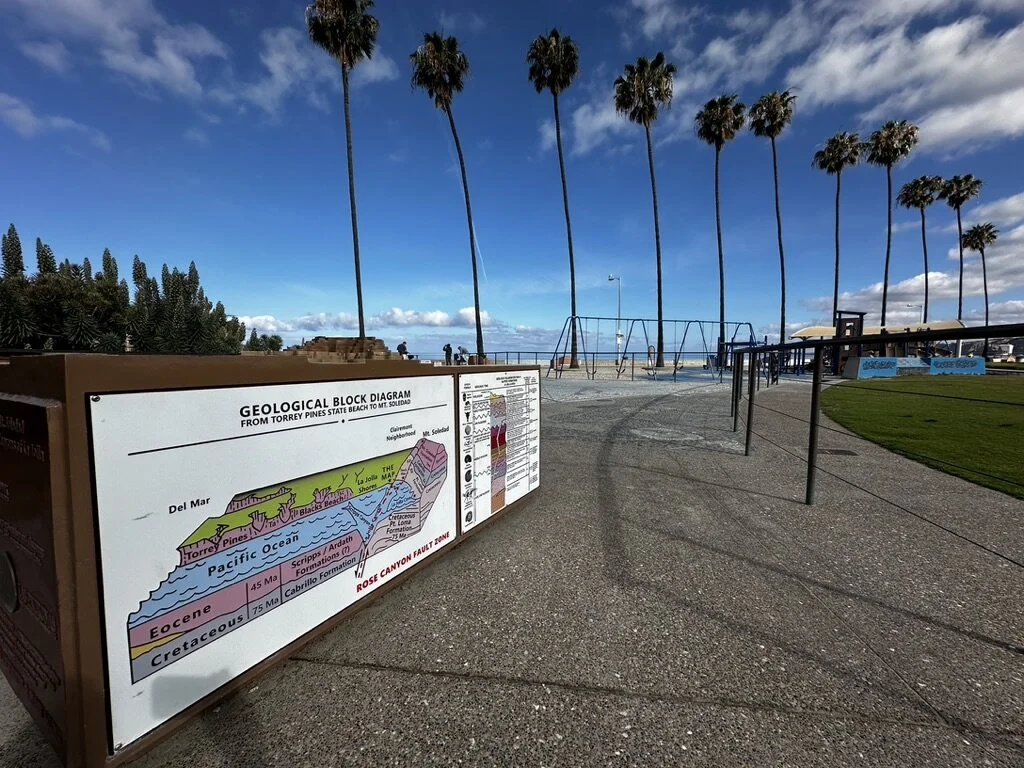
La Jolla Canyon Map Model
La Jolla Shores Walter Munk 3-D Geological map
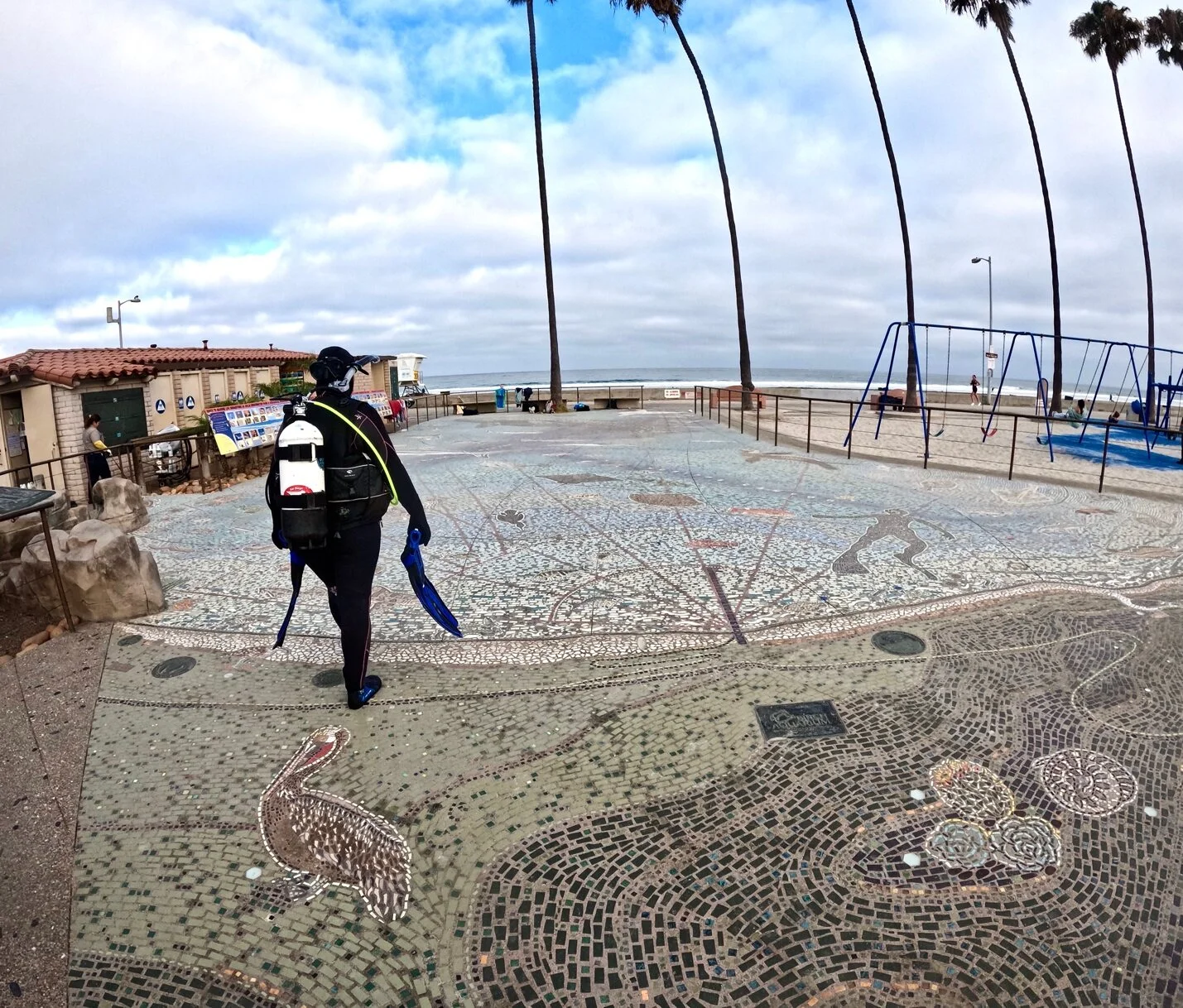
Walkway from Kellogg Park past the restrooms and showers to the beach
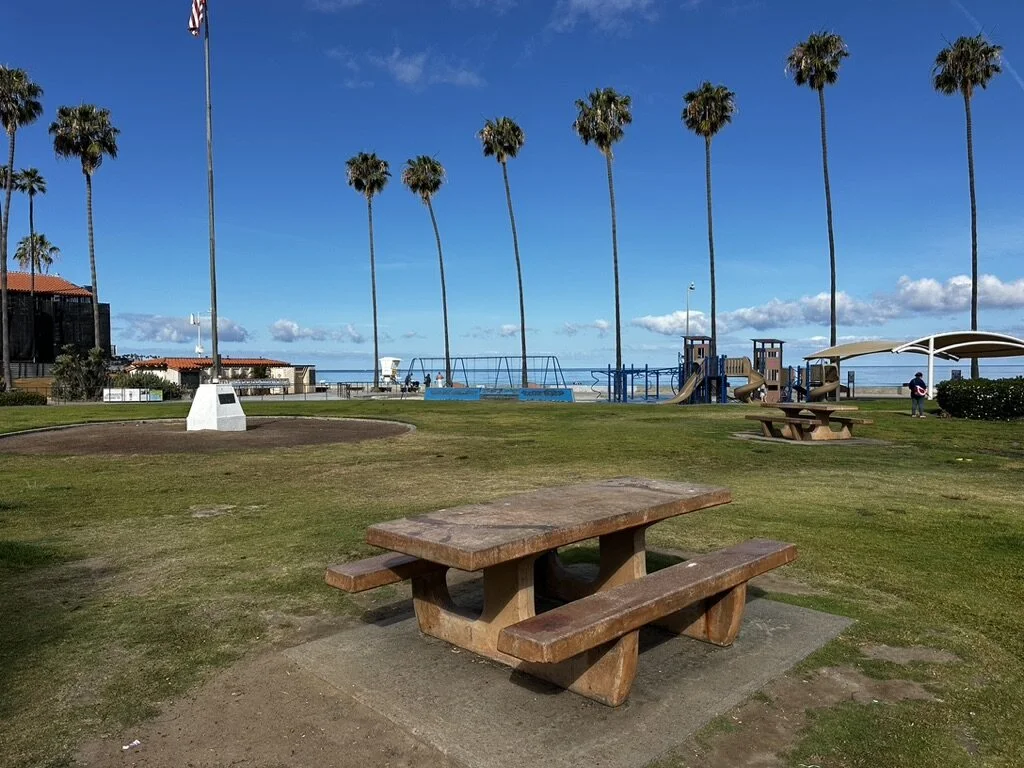
La Jolla Shores Kellogg Park Staging area with view to ocean
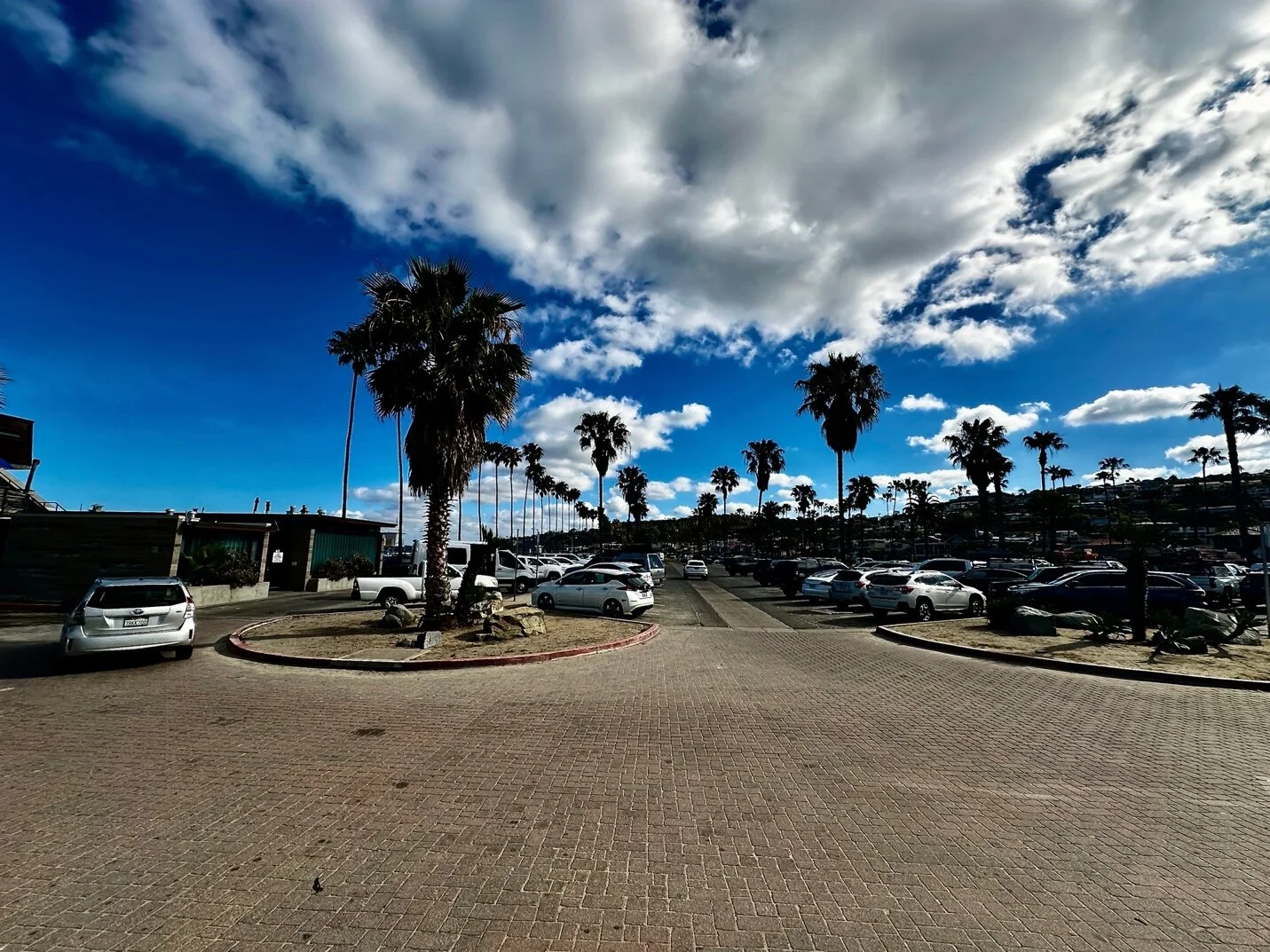
La Jolla Shores parking area
Main la jolla dive sites
Marine Room / South Rim
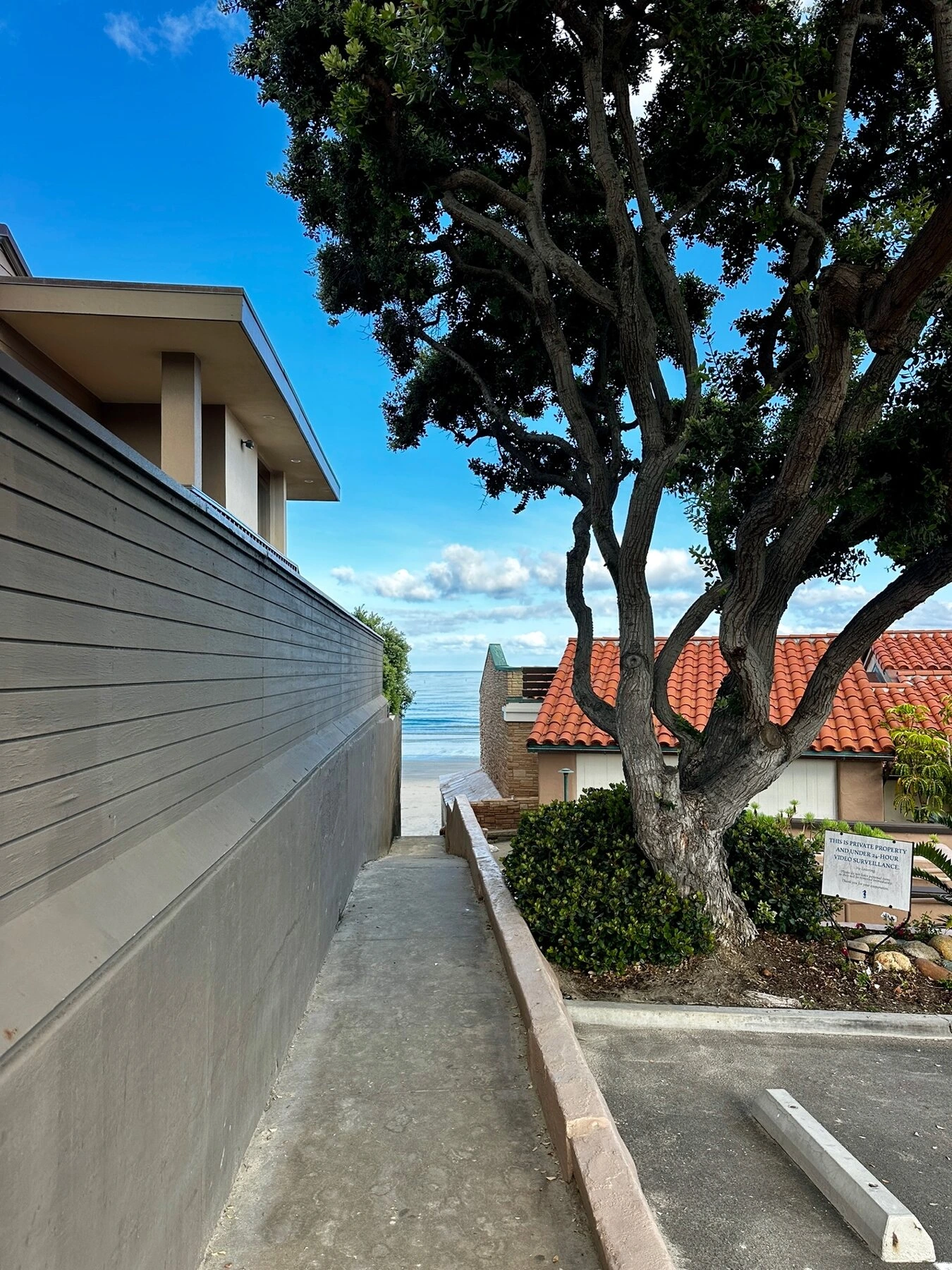
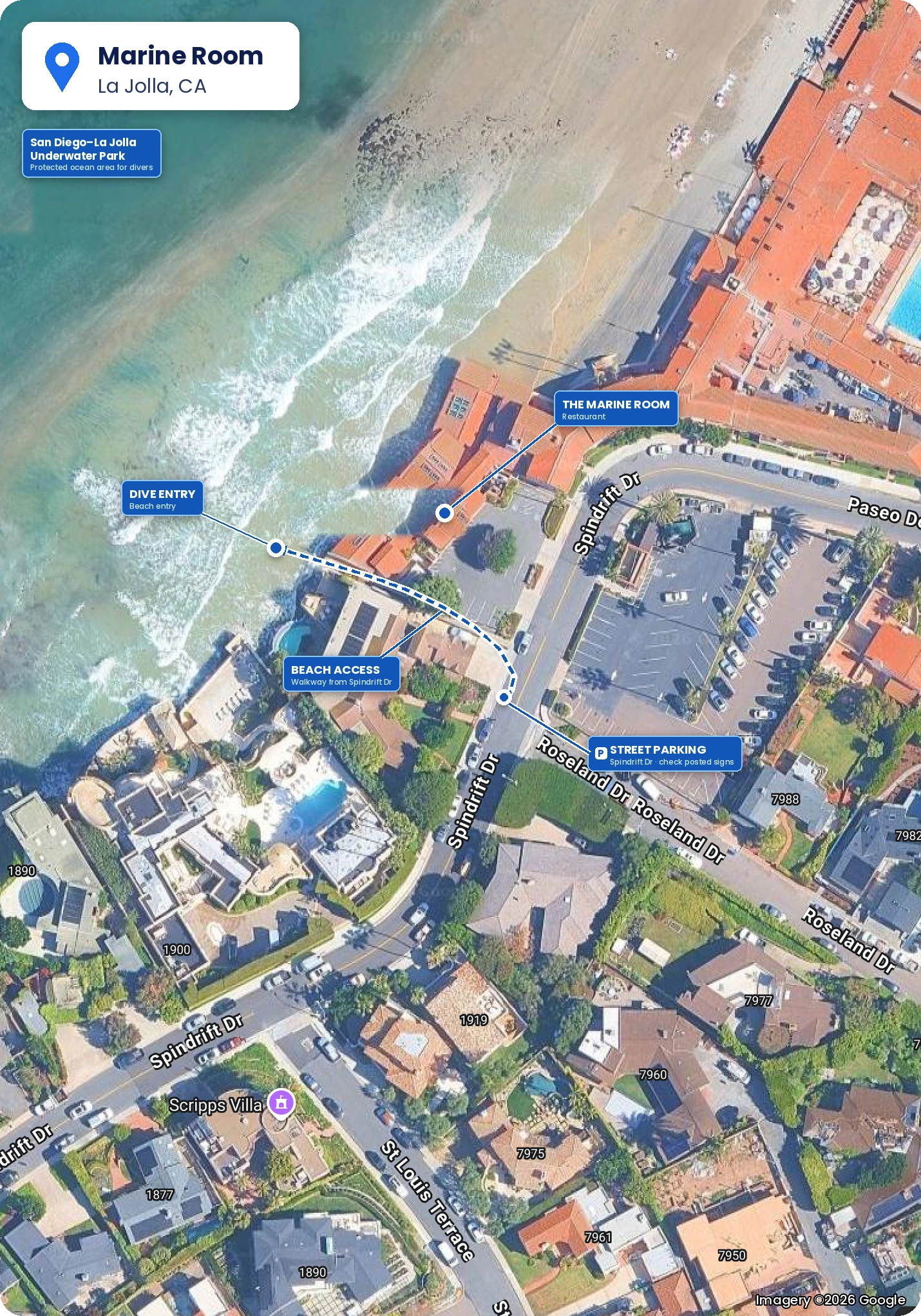
At the southern end of La Jolla Shores, the Marine Room area combines sandy bottom, patches of reef and vegetation, and access toward the south side of the canyon. It can be an excellent site for photographers and patient wildlife observation. Access is through a narrow public walkway near the restaurant; divers should move quietly, respect neighboring property, and keep the passage clear.
Wear sturdy dive boots for the walk and shore entry.
Shuffle through shallow sand to reduce stingray risk.
Check tides, surf, surge, and beach access before committing to the entry.
Remain alert for swimmers and paddlecraft, especially during busy daylight hours.
Walkway to Marine Room Beach
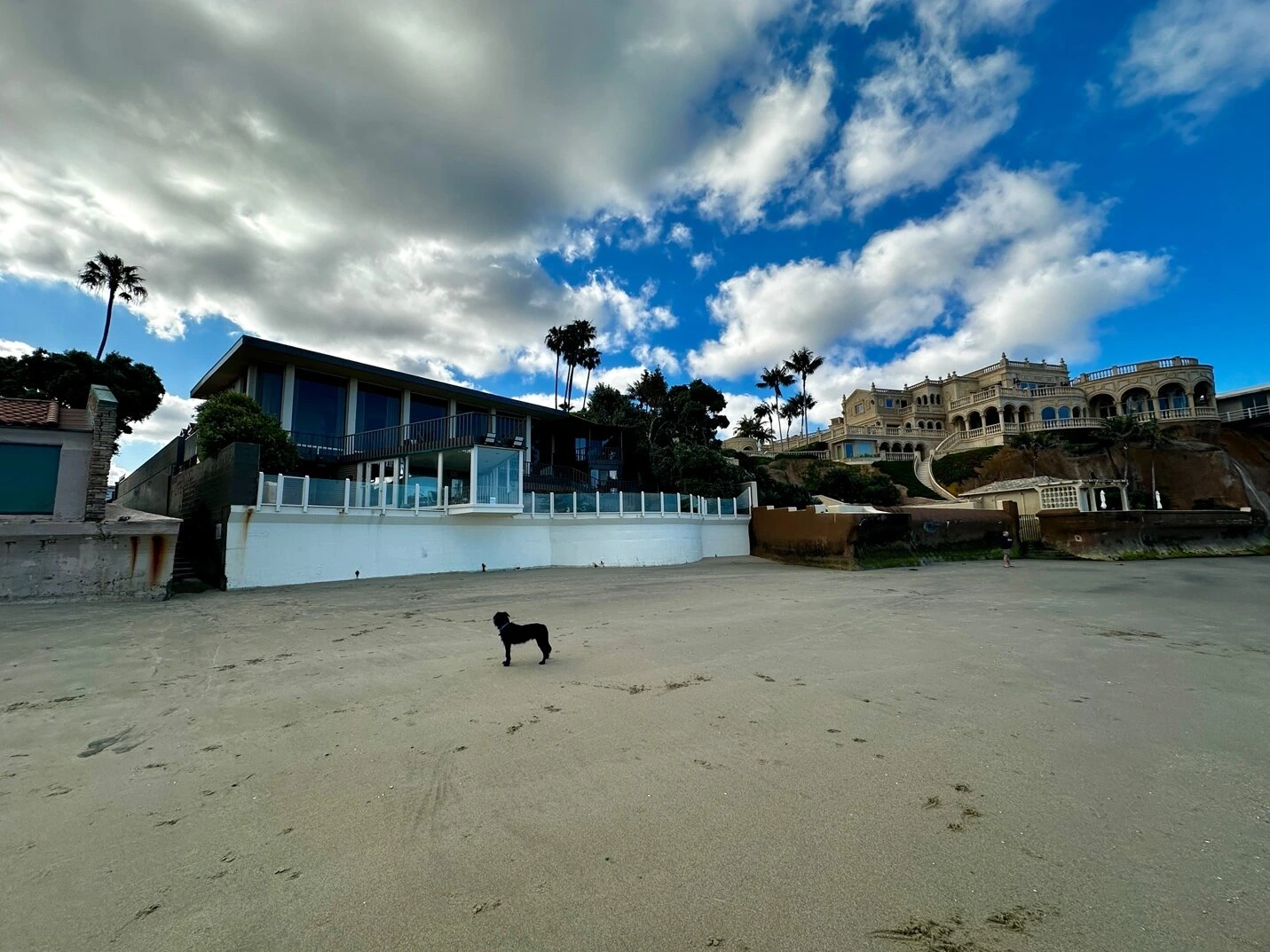
Marine Room Beach (South Rim)
KNOW BEFORE YOU DIVE
Scuba Diving Conditions in La Jolla
La Jolla can be dived throughout the year, but “diveable” does not mean every site is suitable every day. Conditions can vary between the Cove, Shores, and Marine Room—and can change within a single tide cycle.
Water temperature
Expect cool Pacific water and noticeable thermoclines. Surface water is generally warmer in late summer and early fall, while bottom water may remain much cooler. Temperature ranges are planning guidance, not a guarantee.
Visibility
Visibility often ranges from limited to very good and may change quickly due to swell, plankton, wind, runoff, or disturbed sediment. Calm periods between winter storms can produce excellent days.
Surf, swell, and surge
These are often the deciding factors for shore entries. A site that looks manageable from above can still have strong surge around rocks or reduced visibility below.
Physical demands
Cold water, carrying equipment, stairs or sand, surface swimming, and surf entries can make a shore dive more strenuous than a warm-water boat dive.
be prepared
Recommended Exposure Protection & Equipment
La Jolla’s waters can be cool year-round. Having the right exposure protection and equipment helps you stay safe, comfortable, and enjoy your dive.
Scuba
Full 7 mm wetsuit, hood, gloves, boots, and appropriate weighting; or a drysuit when trained and comfortable using one.
Freediving
Seasonally appropriate two-piece freediving wetsuit, generally 5–7 mm, plus neoprene socks and gloves as needed.
Navigation and safety
Timing device/computer, compass, audible signaling device, and site-appropriate surface signaling equipment where permitted.
Night diving
Primary and backup lights, visible surface signaling, and training appropriate to the planned dive.
Additional essentials
Bring warm clothing, water, sun protection, and a dry layer for before and after the dive.
Find your dive experience
Is La Jolla Diving Right for You?
La Jolla offers something for every level of diver — from first-time ocean explorers to seasoned locals. Here’s how to find the best fit for your skills, goals, and experience.
Certified visiting divers
A guided dive is especially useful when you are unfamiliar with California shore entries, cold-water weighting, kelp, local navigation, or rapidly changing conditions.
Newly certified divers
Choose a calm, shallow profile and be honest about comfort, fitness, buoyancy, and recent training. A private guide or refresher may be a better fit than a standard sightseeing tour.
Experienced local divers
La Jolla offers repeat-dive value through changing seasons, wildlife migrations, night diving, macro photography, and multiple routes.
Freedivers
La Jolla Shores provides shallow practice areas and access toward deeper water, but freediving requires trained buddy procedures, appropriate supervision, and strict one-up/one-down safety practices.
Underwater photographers
Kelp-filtered light, reef texture, macro subjects, sharks, rays, sea lions, and occasional turtles create strong opportunities — when photographers maintain buoyancy, awareness, and respectful wildlife distance.
Not Sure Which Experience to Book?
Choose a guided tour for active certified divers, a private tour for individual attention, or a refresher when skills and comfort need rebuilding.
A little preparation goes a long way. Follow these steps to help ensure a safe, smooth, and enjoyable dive experience in La Jolla.
Review certification requirements and bring acceptable proof of certification.
Be truthful about your last dive, number of logged dives, cold-water experience, physical limitations, and comfort in surf.
Check the local surf and beach-condition report, weather, swell, tides, and water quality before departure.
Allow time for parking, equipment fitting, site briefing, and a conservative entry decision.
Use the correct exposure protection and weighting for a thick wetsuit or drysuit.
Agree on route, maximum depth, gas limits, lost-buddy procedure, turn pressure, and exit plan before entering.
Protect the reserve: maintain buoyancy, secure gauges and hoses, and do not take or damage marine resources.
Dive smart
Safety & Local Knowledge
Local conditions can change quickly. Use good judgment, follow guidelines, and dive within your training and experience.
Daily decision rule:When conditions, training, equipment, health, or comfort do not align, change the site, change the plan, or postpone the dive. A booking never overrides a safe no-dive decision.
Check with lifeguards before diving and follow posted beach-use rules.
Do not rely on an online guide as a substitute for certification, current conditions, buddy planning, or professional instruction.
Stay within training and recreational depth limits; the canyon drops well beyond them.
Maintain separation from rocks in surge and protect your exit gas reserve.
Give sea lions, seals, turtles, sharks, and rays room to move naturally. Never touch or pursue them.
Use conservative thermal limits. Cold stress can reduce dexterity, judgment, and enjoyment before a diver recognizes it.
READY TO DIVE LA JOLLA?
Let’s Make It Happen.
Explore guided 1-tank, 2-tank, night, and private dive options with local professionals who know the sites, seasons, and shore conditions.
Do I need to be certified to join a Dive California guided scuba tour?
Yes. Participants must hold at least an Open Water Diver certification from a recognized scuba training agency and present acceptable proof at check-in.
Do I need previous shore-diving or cold-water experience?
It is strongly recommended. Divers without recent shore or cold-water experience should discuss a private tour or refresher before booking.
Can beginners dive La Jolla?
Newly certified divers may enjoy selected shallow routes on suitable days, but conditions, fitness, comfort, recent experience, and guide assessment all matter.
Is La Jolla good for scuba diving year-round?
Yes, diving takes place in every season, but temperature, visibility, marine life, surf, and access vary. Some days or sites may not be appropriate.
When is the best visibility?
There is no guaranteed month. Calm weather and low swell often help, and clear periods can occur between winter storms. Visibility can still change rapidly.
When can I see leopard sharks?
Leopard sharks are most associated with warmer-season aggregations in the shallow La Jolla Shores area, but sightings are seasonal and never guaranteed.
Sea lions live in the area and are frequently observed, but wildlife encounters cannot be promised. Divers must avoid approaching or interacting with them.
Do I need to bring my own gear?
Dive California guided-tour packages currently include a full dive-gear package, weights, and cylinders. Confirm inclusions and sizing on the live booking page before purchase.
What thickness wetsuit should I use?
Most scuba divers use a full 7 mm wetsuit with hood, gloves, and boots, or an appropriate drysuit. Personal cold tolerance and the planned profile matter.
Where should I park?
Parking varies by site. La Jolla Cove has limited time-restricted street parking and paid options; La Jolla Shores has a public lot and neighborhood parking. Arrive early and follow posted restrictions.
Is shore diving better than boat diving?
They are different experiences. La Jolla shore diving provides direct access to kelp, reef, sand, and canyon environments. Boat diving reaches offshore wrecks, Point Loma, and other sites without a shore entry.
Can a dive be changed or canceled because of conditions?
Yes. Ocean conditions and diver safety determine the final site and whether a dive proceeds. Review Dive California’s current cancellation and weather policies before booking.